“Renting, Owning, and the Myth of the Dead Dog”
Recently, I heard someone say this:
“Making rent payments is like paying for a dead dog.”
But is that actually true?
I suppose it is true—if what you’re renting really is a dead dog. Of course, the comment was meant to suggest that rental payments are money thrown away, with no investment made and no equity retained.
I remember talking with a customer about equipment for a project. I mentioned the possibility of renting it. He laughed dismissively and said, “I don’t rent stuff. I just buy it.”
But there are two sides to the rental story, especially in an operating business.
Renting isn’t just for people with poor credit or no pile of cash. In a business context, it’s far less about credit history or equity and much more about overhead targets, frequency of use, and cash flow.
The First Question: What Kind of Business Do You Want?
The first question is almost existential:
What type of business do I actually want to run?
Do you want to commit to growing overhead—yard, shop, staff, equipment, maintenance, and everything that comes with it? Or do you want ultralow overhead: a truck, a trailer, your tools, and anything else rented to the site and charged directly to the job?
That low overhead approach offers freedom and minimal risk. It also allows you to take on a wider variety of work. The trade-off, of course, is reliance on others to meet schedules. But overall, renting is the catalyst for keeping your business aligned with how you want to operate.
The Second Question: Use Frequency and Cash Flow
If you are committed to growing capital and overhead, the next question becomes practical:
Do I use it enough to own it?
Owning equipment feels good. But if it sits in a corner doing nothing, it’s about as close to a dead dog as you can get.
Consider this example:
At roughly nine rentals per year, the cashflow requirement is similar. The difference?
The bank wants its payment every month, while the rental shop only wants money when you actually have a customer.
Now suppose you are this guy. “I don’t rent, I just buy”.
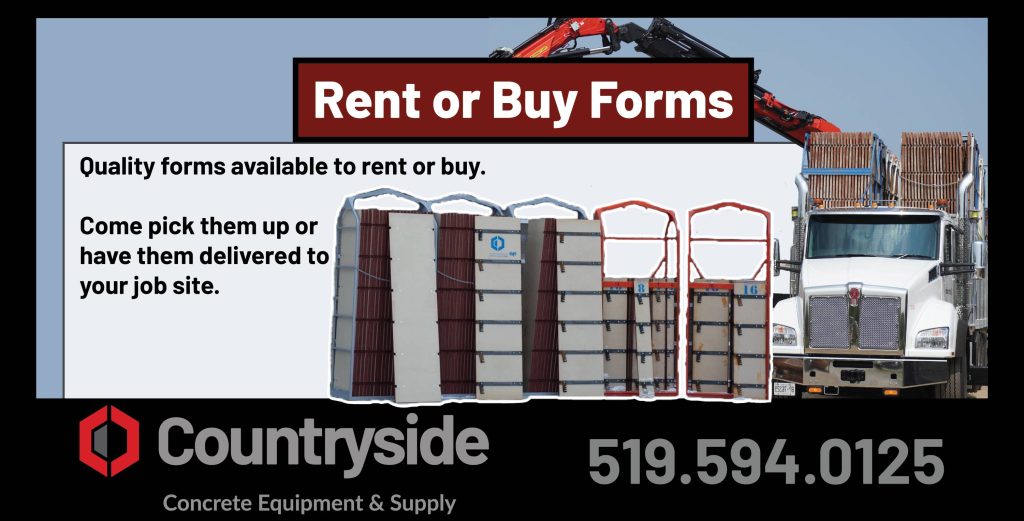
You need the forms once or twice, you have the cash, so you buy them. You use them on that big job and then park them behind the shop, convinced you own an asset.
But if your money is worth 7%, and you factor in realistic depreciation—say 0.5% per use or 10% annual depreciation (used or not)—that “asset” is quietly costing you about $1,700 per month.
The Hidden Cost of Ownership
Here’s another mistake owners make that renters usually don’t.
Renters know they must expense the rental to the job, including markup for administration, planning, and coordination. Owners can fall into the trap of thinking they can do the work cheaper because they already own the equipment. Replacement time comes—and they realize they never actually recovered the true cost of ownership.
“But the Rental Company Is Making All the Money…”
Then there is the belief that rental companies are getting rich off equipment you could own yourself.
The reality is that equipment rental is a quantitative game. A single piece or set rarely cashflows on its own. Either everyone wants it at once, it’s an off year and nobody wants it. Plus there is the factor of maintenance and repairs.
Rental companies thrive when they operate at scale: some assets are paid for, some are financed, and across the whole fleet the business works.
So… Dead Dog?
Renting for your business has nothing to do with dead dogs.
Unless it’s a shovel.
There is a time to rent and a time to buy. The key is asking the right questions:
And that whole thing about cash flow being king?
That part is actually true.